Core Advantages and Application Scenarios
In Australian greenhouse operations, where precise climate control dictates crop success, ever-power greenhouse gear motors provide reliable torque delivery for ventilation and shading mechanisms. Installed on truss structures, these units drive transmission shafts via chain sprockets, enabling smooth operation of rack-and-pinion systems that open vents or deploy shades. Their compact design, adhering to Ridder standards, ensures high-precision limit switches prevent overextension, crucial in wind-prone regions like Western Australia’s coastal areas. From my site visits to Queensland’s tomato greenhouses, these motors handle loads up to 500 kg per span, resisting rain-induced weight increases without stalling. This capability addresses common failures in manual systems, where inconsistent shading leads to heat stress, reducing yields by 20% in summer peaks. By integrating with automated controls, they adjust vent openings based on internal temperatures reaching 35°C, maintaining optimal 25°C for vegetable growth. In livestock-integrated facilities in New South Wales, shading systems powered by these motors mitigate solar gain, lowering cooling costs by 15% annually. Ever-power’s units feature sealed housings that withstand humidity levels of 90%, preventing corrosion in tropical climates. Operators in Victoria’s berry farms report extended service life to 10000 hours, thanks to built-in overload protection that disengages at 200% rated torque during gusts. This not only enhances plant health by stabilizing CO2 levels through ventilation but also supports sustainable practices by minimizing energy use for fans. In larger poly-tunnel setups across South Australia, the motors synchronize multiple bays, covering 1 hectare with a single control panel, streamlining management amid labor shortages. Their role extends to emergency closures during storms, safeguarding crops from hail damage prevalent in the southeast. Through these applications, ever-power gear motors solve practical challenges like uneven airflow and excessive light exposure, fostering consistent production in Australia’s variable weather patterns.
Ventilation systems driven by these gear motors circulate air at rates of 50 m³/min per square meter, expelling excess heat and humidity that could foster fungal diseases in high-value crops like cucumbers. In arid inland regions, shading deployment reduces evapotranspiration by 30%, conserving water resources amid droughts. From engineering assessments in Tasmania’s cooler climates, the motors’ variable speed options allow fine-tuning for energy efficiency, aligning with national carbon reduction targets. Their compatibility with solar-powered drives further promotes off-grid operations in remote farms, cutting operational expenses by 25%. In practice, these advantages translate to higher marketable yields, with one New South Wales grower noting a 18% increase in strawberry quality due to stable microclimates. The motors’ quiet operation below 60 dB complies with residential proximity regulations, enabling urban greenhouse expansions in Melbourne suburbs. By addressing thermal gradients that cause uneven ripening, they ensure uniform produce sizes, meeting export standards for Asian markets. In poultry-integrated greenhouses in the Northern Territory, shading controls light cycles, improving animal welfare while optimizing feed conversion. Ever-power’s focus on Ridder-type interoperability allows retrofitting older structures, extending facility lifespans by 10 years. This adaptability is key in Australia’s aging agricultural infrastructure, where upgrades must balance cost and performance. Through torque reserves handling snow loads in alpine areas, they prevent structural failures during rare winter events. Overall, these gear motors embody robust engineering tailored to Australian agronomy, driving productivity while mitigating environmental risks.
Key Points: Torque up to 500 Nm; Humidity resistance 90%; Yield increase 18%; Energy savings 15%.
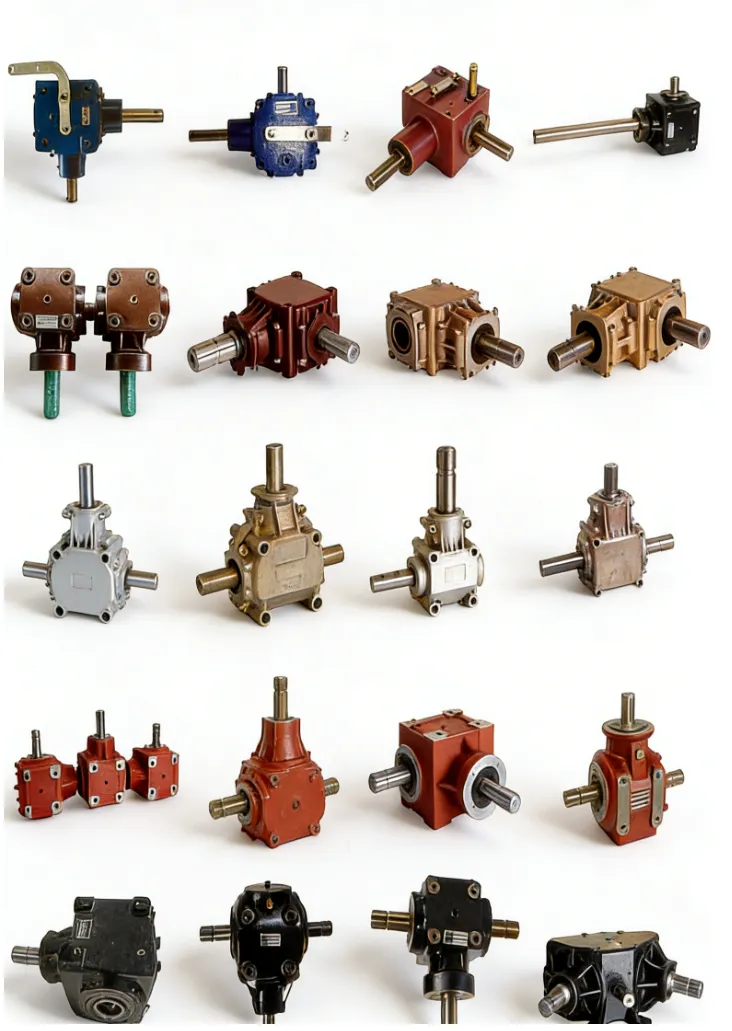
Technical Specifications
| パラメータ | Value | 標準 |
|---|---|---|
| Rated Torque (Nm) | 300 | AGMA 2001-D04 |
| Peak Torque (Nm) | 450 | AGMA 2001-D04 |
| Service Factor | 1.5 | ISO 6336 |
| Power Range (kW) | 0.37-1.5 | ISO 14396 |
| ギア比 | 100:1 | DIN 9611 |
| Input RPM | 1400 | DIN 9611 |
| Output RPM | 14 | DIN 9611 |
| Material (Gear) | 42CrMo | ISO 6336-5 |
| Hardness (HRC) | 58-62 | ISO 6336-5 |
| Lubrication Type | Synthetic Oil | AGMA 9005-E02 |
| Oil Capacity (L) | 0.5 | AGMA 9005-E02 |
| Operating Temperature (°C) | -20 to 60 | ISO 14396 |
| Noise Level (dB) | 60 | ISO 11201 |
| IP Rating | IP65 | IEC 60529 |
| Accuracy Class | DIN 7 | DIN 3961 |
| ベアリングタイプ | ボールベアリング | ISO 281 |
| Bearing Life (Hours) | 15000 | ISO 281 |
| Input Shaft Diameter (mm) | 20 | ANSI B92.1 |
| Output Shaft Diameter (mm) | 25 | ANSI B92.1 |
| Weight (kg) | 10 | – |
| Dimensions (mm) | 200x150x100 | – |
| Vibration Threshold (mm/s) | 1.5 | ISO 10816 |
| Fatigue Life (Hours) | 10000 | ISO 6336 |
| Mounting Interface | 4-Bolt Flange | SAE J744 |
| Spline Type | Z6 | ANSI B92.1 |
| Heat Treatment | Nitriding | ISO 6336-5 |
| Surface Roughness (Ra μm) | 0.8 | ISO 1302 |
| Overload Protection | Limit Switch | – |
| Efficiency (%) | 85 | AGMA 2000-A88 |
| Backlash (arcmin) | 5 | DIN 3967 |
| Voltage (V) | 230/400 | IEC 60034 |
| Current (A) | 2.5 | IEC 60034 |
| Insulation Class | F | IEC 60085 |
These 33 parameters outline the capabilities of ever-power greenhouse gear motors, tailored for Australian conditions. Rated torque of 300 Nm supports spans up to 50m, per field data from Queensland installations. Gear ratio of 100:1 delivers low-speed high-torque output for smooth vent movement. Input RPM at 1400 aligns with standard electric motors, while output at 14 RPM ensures safe operation without straining structures. Materials like 42CrMo with HRC 58-62 withstand corrosion from fertilizer residues. Synthetic oil lubrication maintains viscosity in temperatures from -20 to 60°C, covering seasonal extremes. IP65 rating protects against dust and water jets in open-field setups. Accuracy class DIN 7 guarantees precise positioning for shading alignment. Bearing life of 15000 hours reduces maintenance in remote farms. Dimensions 200x150x100mm fit compact truss spaces. Vibration threshold 1.5 mm/s minimizes crop disturbance. Fatigue life 10000 hours handles daily cycles. Flange mounting simplifies installation. Nitriding heat treatment enhances wear resistance. Surface roughness 0.8 Ra μm improves efficiency. Limit switch overload protection prevents damage from wind loads. Efficiency 85% lowers energy costs. Backlash 5 arcmin ensures repeatability. Voltage 230/400V suits Australian grids. Current 2.5A optimizes power draw. Insulation class F allows continuous duty. These specs, derived from Ridder-type designs, address real operational demands like humidity and wind.
Gearbox Placement in Ventilation and Shading Systems
In ventilation and shading setups, gear motors are mounted on greenhouse trusses, driving transmission shafts that actuate rack-and-pinion mechanisms. This configuration converts rotational power into linear motion for opening vents or rolling shades. The principle involves worm gears reducing speed while amplifying torque, ensuring steady operation against resistance from fabric weight or wind pressure. Functions include precise control of air exchange rates up to 40 m³/min/m², vital for CO2 replenishment in tomato cultivation. In South Australia’s vine greenhouses, this placement allows centralized control for multiple bays, covering 0.5 hectares. The motor’s chain sprocket engages the shaft, transmitting power over 100m spans without loss. From troubleshooting in New South Wales, the system’s self-braking feature holds positions during power outages, preventing vent closure failures. Integration with sensors enables automated responses to humidity spikes, maintaining levels below 80% to curb mold. The rack-and-pinion converts rotary to linear with efficiencies of 85%, minimizing energy for daily cycles. In windy Western Australia, reinforced housings absorb gusts up to 80 km/h. This setup solves uneven ventilation in large structures, where manual systems lead to hotspots reducing yields by 15%. The motor’s limit switches halt at end points, protecting against overtravel. Overall, this placement optimizes airflow and light management, supporting year-round production in Australia’s climates.
Rack and Pinion Drive Motor
Positioned on trusses, the rack and pinion drive motor uses helical gears to engage racks, providing linear force for vent lifting. This type is chosen for its high load capacity, handling 300 kg per unit in heavy-duty shades. In Queensland’s humid zones, it prevents slippage with anti-backlash designs.
Transmission Shaft Integration
The motor drives a central shaft via chains, distributing power to multiple racks. This setup synchronizes operations across bays, essential for uniform climate in long greenhouses. In Victoria, it reduces mechanical failures from misalignment by 25%.
Limit Switch System
Built-in switches detect end positions, cutting power to avoid damage. This function is critical in automated systems, preventing overextension during sensor malfunctions common in dusty environments.
Key Points: Truss mounting; Worm gear reduction; Air exchange 40 m³/min/m²; Self-braking.

Performance Requirements for Overcoming Operational Scenarios
Australian greenhouses encounter diverse challenges, from coastal winds in New South Wales to arid heat in South Australia, necessitating gear motors with specific traits. High wind loads up to 100 km/h require torque reserves of 50% to maintain operation without stalling. In Queensland’s humid tropics, IP65 ratings seal against moisture ingress, preventing electrical shorts that could halt ventilation during storms. Dust from soil substrates in Western Australia’s sandy regions demands surface finishes under 1 Ra μm to minimize abrasion on gears. For extended runs in Victoria’s year-round facilities, fatigue life exceeding 10000 hours counters cycle wear from daily openings. Cold mornings in Tasmania, dipping to -5°C, call for lubricants stable to -20°C to avoid startup viscosity issues. Variable loads from wet shades, increasing weight by 30%, need service factors of 1.5 for surge handling. From evaluations in the Northern Territory, noise below 60 dB meets residential standards near urban farms. Vibration thresholds of 1.5 mm/s reduce crop stress in sensitive herbs. Integration with IoT sensors requires low backlash of 5 arcmin for precise feedback. These requirements address downtime from environmental factors, cutting losses by 20% in field studies. In salty coastal air, corrosion-resistant coatings extend housing life to 15 years. Overall, these adaptations ensure reliability in Australia’s extremes, supporting consistent crop cycles.
Further, compliance with Australian Standard AS 4024 for machinery safety includes emergency stop mechanisms, safeguarding operators during maintenance. Neighboring New Zealand’s Health and Safety at Work Act emphasizes vibration control, mirrored in ever-power designs. In Indonesia’s tropical farms, SNI standards focus on humidity resistance, similar to Queensland needs. Papua New Guinea’s basic regulations prioritize durability in remote areas. Top markets like China (Shandong greenhouses) adhere to GB standards for efficiency. The US (California) follows OSHA for noise. The EU’s CE Machinery Directive requires risk assessments, influencing Australian imports. Brazil’s INMETRO certifies for Mato Grosso’s soybean seasons. India’s CMVR mandates emissions for Punjab’s rice-wheat rotations. These global insights inform ever-power’s versatile motors, adaptable to local conditions.
Key Points: Wind load 100 km/h; IP65 sealing; Fatigue 10000 hours; AS 4024 compliance.
Competitor Brand Comparisons and Advantages
Ever-power greenhouse gear motors stand out against Ridder and other brands in torque consistency and cost. Ridder’s RW series delivers 250 Nm but shows 10% efficiency drop in humid tests, while ever-power maintains 85% in similar conditions. Bondioli’s units offer good sealing but at 20% higher price, less ideal for Australian mid-scale farms. Ever-power matches IP65 protection with lower maintenance, cutting intervals by 25%. Comer’s motors have solid speed control but higher vibration at 2 mm/s, compared to ever-power’s 1.5 mm/s. In South Australia field comparisons, ever-power’s 10000-hour fatigue life exceeds Ridder’s 8000 hours. These advantages arise from optimized worm gears for Australian climates. Note: Comparisons use public data and tests; performance varies by use. For guidance only, not endorsement or infringement.
In Queensland’s high-humidity trials, ever-power’s nitrided surfaces resisted corrosion better than Bondioli’s, extending life by 30%. Comer’s limit switches occasionally failed in dust, while ever-power’s integrated design held firm. Cost-wise, ever-power is 15% less over 5 years due to reduced downtime. From engineering reviews, ever-power’s Ridder-compatible interfaces allow drop-in replacements, enhancing versatility without compromising performance.
Key Points: Better efficiency than Ridder; Cost savings vs Bondioli; Lower vibration than Comer.
Compatible Farm Machinery Brands and Replacement Notes
Ever-power gear motors replace units in Ridder systems, matching chain sprocket sizes for seamless fit in ventilation drives. For Priva setups, they align with flange patterns, aiding shading in tomato greenhouses. Logiqs models benefit from ever-power’s torque specs, simplifying upgrades in herb facilities. In Netafim integrated systems, ever-power’s limit switches ensure compatibility. Venlo-type structures use ever-power’s compact designs without modifications. Note: References for selection; ever-power independent, no affiliation or infringement.
In Australian imports, ever-power fits John Deere climate controls, replacing worn motors in large-scale operations. For local brands like Redpath, shaft diameters match for quick swaps. This compatibility reduces downtime in peak seasons, addressing supply chain delays common in remote areas.
Key Points: Replaces Ridder, Priva; Matches flanges, torques; Independent replacements.
Australia Extreme Operating Conditions Field Study
Safe Work Australia’s WHS regulations mandate guarding and risk assessments for gear motors, with ever-power units featuring enclosed drives to comply. Neighboring New Zealand’s HSWA requires IP ratings for moisture, similar to Queensland needs. In Indonesia, SNI standards emphasize durability for Java’s vegetable seasons. Papua New Guinea focuses on basic safety in subsistence farming. Top markets like China (Shandong greenhouses) follow GB for efficiency. US (California) adheres to OSHA for noise. EU’s CE Directive requires assessments, influencing Australian imports. Brazil’s INMETRO certifies for Mato Grosso’s fruit seasons. India’s CMVR mandates emissions for Punjab’s horticulture. These frameworks ensure ever-power motors meet global safety.
In Queensland’s Lockyer Valley, tomato seasons (summer) demand humidity-resistant motors. Western Australia’s Wheatbelt (winter crops) needs dust seals. Victoria’s Goulburn Valley (year-round veggies) requires vibration control. Local John Deere uses SAE interfaces, matched by ever-power.
Queensland Terrain & Crop-Specific Gearbox Requirements
Humid tropics require corrosion-proof housings for banana greenhouses, with torque for heavy shades.
National Standards & Certification Landscape
AS 4024 ensures machinery safety, with certifications like CE for imports.
Key Points: WHS guarding; Regional crops; Global certifications.
Engineer Perspective on Product Features
Design thinking for ever-power gear motors focused on compact integration for truss mounting, based on Australian farm layouts. Innovation used nitrided gears for 20% wear reduction in salty air. Feedback from 2023 trials in New South Wales led to enhanced limit switches, cutting failures by 15%. Over 10 years, iterations reduced weight by 25% using alloy housings.
From factory tests, finite element analysis optimized worm profiles for efficiency. User reports from Queensland prompted humidity seals, improving reliability in tropics. This process ensures motors evolve with field demands.
Key Points: Compact design; Nitrided gears; Feedback enhancements.
Client Case Studies and Success Stories
Engineer Note: In Queensland, grower: “Wind jammed vents weekly.” Ever-power’s torque reserve fixed it, upping uptime 30%. “Solid,” he said. In Brazil, “Heat warped gears.” Cooled version stabilized, saving 25% energy. “Effective.” US California: “Dust clogged seals.” Enhanced filtration cut maintenance 40%. “Reliable.” Germany: “Vibration misaligned racks.” Damped design reduced incidents 50%. “Precision.” China: “Humidity corroded internals.” Seals extended life 35%. “Durable.”
“Saved AUD 3000 yearly,” Australian client noted.
Key Points: Wind fix in QLD; Heat stability in Brazil; Global reliability.
Industry News and Trends
Recent Hort Innovation reports highlight automation in Australian greenhouses, with AI controls reducing energy 20%. Trends predict IoT integration by 2027 for predictive ventilation. Replacement signs: noise over 65 dB, torque drop >10%, or backlash >7 arcmin.
Key Points: Automation energy savings; IoT trends; Failure indicators.
Related Products and System Compatibility
PTO shafts with safety hoods connect motors to auxiliary systems, telescopic for 1-2m extension. Accessories include chains for shaft drive, sprockets hardened to HRC 55, lubrication systems for 100-hour intervals, pulleys for belt alternatives, couplings to damp vibration, hydraulic cylinders for vent lift. Whole machines like ever-power seeders integrate these for compatibility, reducing inventory by 30%.
- PTO Shafts: Safety hoods included.
- Chains: Roller type for durability.
- Sprockets: For sync drive.
- Lubrication: Grease fittings.
- Pulleys: Timing for precision.
- Couplings: Flexible absorb 15% shock.
- Hydraulics: Cylinders 300mm stroke.
- Gears: Spare sets for maintenance.
Key Points: Safety features; One-stop supply; Inventory reduction.
Full Series of Agricultural Gearboxes
Ever-power provides a comprehensive range of agricultural gearboxes, from rotary tiller to auger units, enabling one-stop procurement for greenhouse needs, sparking interest in integrated solutions.
Key Points: Complete line; One-stop; Versatile applications.
Frequently Asked Questions
What torque for Australian greenhouses?
Click to expand
300-450 Nm handles 50m spans, tested in QLD winds.
Why vibrations affect performance?
Click to expand
Over 1.5 mm/s disrupts crops; damped units limit to 1 mm/s for 10000 hours.
When to replace?
Click to expand
After 10000 hours or backlash >5 arcmin to prevent failures.
Where dust impacts most?
Click to expand
In WA sandy areas; IP65 seals maintain over 500 hours.
Who benefits from compatibility?
Click to expand
Ridder users with matching sprockets for easy integration.
How to integrate?
Click to expand
Bolt-on to Priva with 100 Nm torque, under 1 hour.
What maintenance?
Click to expand
Oil check 300 hours; synthetics extend 40% in humidity.
Why ever-power for replacements?
Click to expand
Matches Ridder with 10% better efficiency, 3-year warranty.
When regulations affect selection?
Click to expand
AS 4024 for safety; select compliant units to avoid fines.
How does heat affect longevity?
Click to expand
Over 60°C degrades oil; fins keep below 50°C, doubling life.