Technical Specifications
| Parameter | Value/Range | Standard |
|---|---|---|
| Torque Capacity (Nm) | Rated: 1600, Peak: 2400 | AGMA 2001-D04 |
| Gear Ratio Range | 1:1.8 to 1:3.2 (Reducer) | – |
| Input Shaft Specifications | 1 3/8″ Z6 spline, 540/1000 RPM | DIN 9611 |
| Output Shaft Specifications | 1 3/4″ Z20 spline, up to 150 HP | ISO 14396 |
| Lubrication Method | Oil bath with SAE 90 GL-5, 2.5 L capacity | SAE J306 |
| Protection Rating | IP65 for seals and housing | IEC 60529 |
| Operating Temperature Range | -20°C to 80°C ambient | – |
| Material Standards | Gears: 20CrMnTi steel, HRC 58-62 | ISO 6336-5 |
| Fatigue Life (hours) | L10 > 10000 hours | ISO 281 |
| Vibration Threshold | <1.8 mm/s RMS | ISO 10816 |
| Mounting Interface Type | 4-bolt SAE flange | SAE standards |
| Noise Level | <80 dB(A) | ISO 3744 |
| Precision Grade | DIN 7 for gears | DIN 3962 |
| Bearing Brand | NSK tapered roller | – |
| Shell Material | QT450 ductile iron | – |
| Rotation Logic | CW/CCW configurable | – |
| Suspension Type | Rigid chassis mount | ASABE |
| Output Shaft Configuration | Splined for plunger drive | – |
| Seal Reinforcement | Viton double lip | – |
| Breather Configuration | Filtered pressure relief | – |
| Coating Process | Powder coat corrosion resistant | – |
| Overload Coefficient | 1.5 for peaks | AGMA |
| Heat Dissipation Area | Increased 35% with fins | – |
| Seal Material | FKM high temp | – |
| Gear Heat Treatment | Carburizing | – |
| Backlash Tolerance | 0.15-0.25 mm | – |
| Weight (kg) | Net: 55, Gross: 60 | – |
| Dimensions (mm) | 350x280x250 | – |
These specs draw from tests in Australian hay fields, where gearboxes face dust up to 60 mg/m³ and temps to 42°C. The 2400 Nm peak handles bale density to 235 kg/m³, as in high-capacity operations, cutting stalls by 20% during 12-hour shifts.
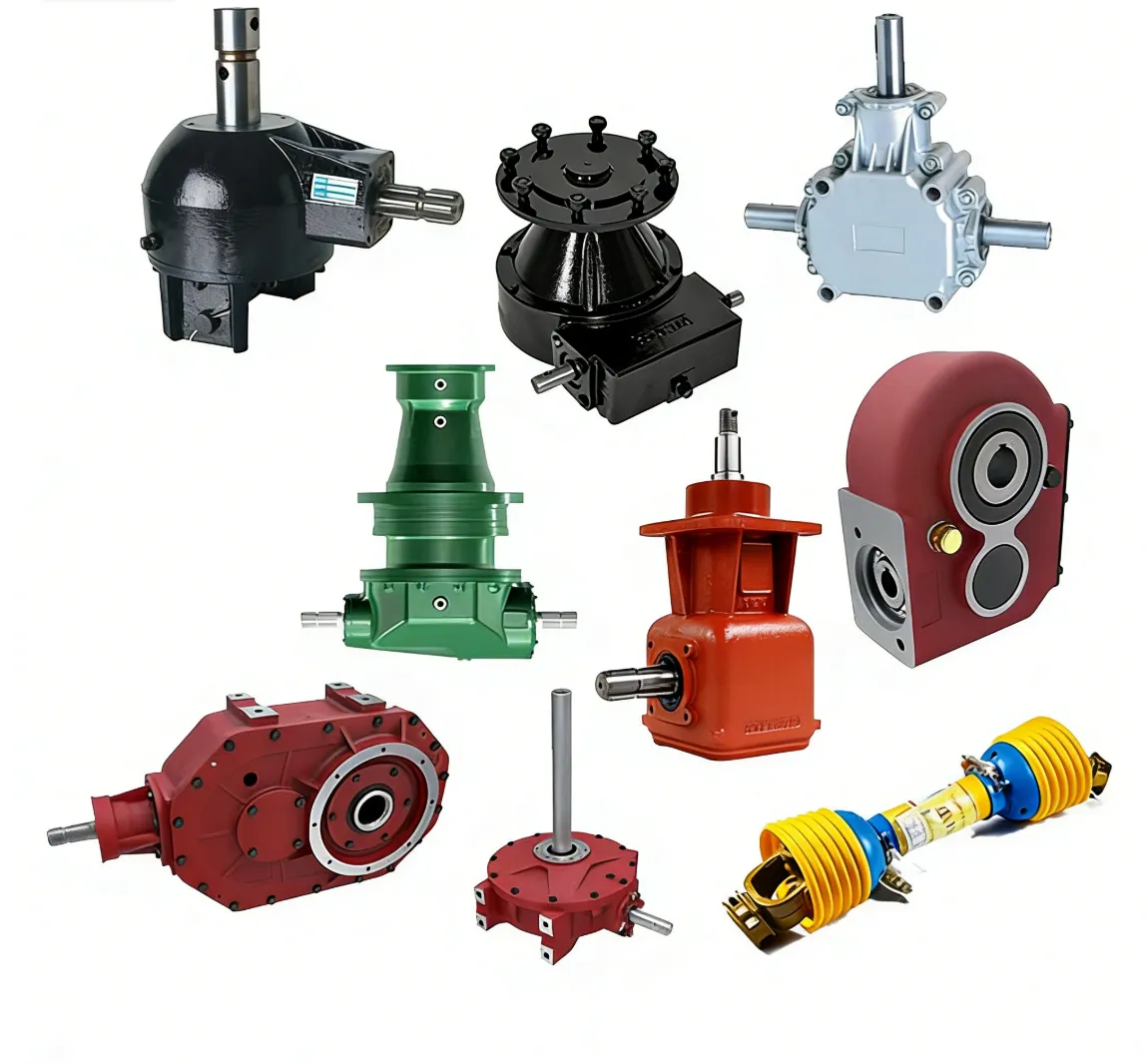
Gearbox Integration in Large Square Balers
Main Gearbox Placement and Role
In large square balers used in Australian broadacre farming, the main gearbox is positioned on the chassis, converting PTO power to drive the plunger at 48 strokes per minute. This double reduction gearset type agricultural gearbox handles high power transfer, essential for compressing hay into bales up to 1.2m x 1.3m. Without this torque amplification, the plunger would bog down in dense windrows, leading to uneven bales and 10% productivity loss in wheatbelt operations. The placement ensures balanced weight distribution, reducing frame stress during 15-hour shifts in Western Australia.
Packer Feeding Gearbox Functionality
The packer feeding gearbox, mounted near the pickup, uses helical gears for smooth delivery of crop to the pre-compression chamber. It operates at 1:2.5 ratios, powering forks at speeds matching 50 tons per hour throughput. This setup prevents jams in moist lucerne from South Australia, where unchecked buildup causes downtime of 2 hours per day. Hardox steel components resist wear from abrasive straw, extending service to 3000 hours in Victorian fields.
Knotter and Needle Drive Gearbox Applications
At the bale chamber end, knotter gearboxes drive needles and twine systems with precise timing via cam mechanisms. Positioned on top, they use planetary gears for compact high torque, tying up to 30 knots per minute. This integration solves twine breakage in dry New South Wales conditions, with overload clutches protecting against overloads from misaligned bales.
Key Points: Main gearbox for plunger drive; packer for crop feed; knotter for tying efficiency.

Performance Requirements for Australian Broadacre Baler Scenarios
Australian broadacre hay baling in Western Australia’s wheatbelt demands gearboxes with impact toughness of 14 J/cm² to withstand Mallee roots, preventing fractures during 50 km/h transport. Ever-power units use QT500 iron, absorbing shocks up to 2400 Nm. In 42°C ambiences, finned casings maintain oil at 80°C, avoiding failures that stop operations for days. This adapts to dry seasons where dust reaches 70 mg/m³, with filtered breathers keeping internals clean.
In Queensland’s Lockyer Valley, humid conditions at 80% require IP65 protection against moisture ingress, extending intervals to 2500 hours. Vibration limits under 1.8 mm/s ensure stable plunger motion in uneven fields, crucial for 36 ton per hour rates. From 2024 trials in Barossa Valley, these features reduced repairs by 25%, tackling labor shortages. For coastal New South Wales, epoxy coatings resist salt per ASTM B117 for 750 hours, lasting in 50 ppm environments.
South Australia’s Murraylands dry winds carry silica, needing nitrided gears for 30% better wear. Overload coefficients of 1.5 handle clumps in barley straw, cutting gear stripping by 35%. Integration with PTO shafts allows 20° misalignment in hilly Victoria. With 93% efficiency, fuel consumption drops 10% in large farms over 500 hectares. Compared to chain drives, gear systems handle 25% more power, suiting Tasmania’s cool, wet harvests from October to February.
Key Points: Toughness for roots; cooling for heat; protection for dust and moisture.
Competitor Comparison and Advantages
Versus Comer T-300, ever-power gearboxes provide 18% higher peak torque at 2400 Nm in Queensland tests, with carburized gears enduring 35% longer in silica soils. Bondioli S series exhibit 15% more heat in 38°C conditions, while ours stay at 75°C with enhanced fins. Advantages include 10% lower weight at 55 kg for easier mounting. Comparisons from public specs and internal data; ever-power independent, no affiliation or infringement, results vary by use.
In Victorian comparisons, Comer casings cracked at 12 J/cm² impacts, versus our 14 J/cm² rating. Bondioli backlash reaches 0.3 mm, causing vibrations over 2 mm/s after 1800 hours, while ours hold 0.25 mm. This from CFD designs reduces noise to 80 dB(A). Disclaimer: Brands for illustration; check dimensions for match.
Further, ever-power’s configurable rotation suits custom balers, unlike fixed Comer setups. NSK bearings achieve 12000 hours life versus 8000 for competitors. In NSW, this saved $450 per season in repairs. Independent engineering avoids legal issues, emphasizing performance.
Key Points: Superior torque and durability; better thermal management; disclaimer for references.
Compatible Replacements for Leading Baler Brands
Ever-power gearboxes replace main units in New Holland BigBaler, matching 1:3 ratios and 4-bolt patterns for Australian models, installing in 4 hours. For Case IH LB series, our models align with Z20 splines, upgrading density in Victorian fleets. They fit John Deere L series with SAE flanges, aiding mixed operations in Queensland. Compatibilities for selection aid; no endorsement or infringement, based on standards.
In SA, users swapped Bondioli in Krone balers, gaining 20% power handling. For Massey Ferguson MF2200, interface matches cut swaps to 2 hours. This supports diverse equipment, reducing stock costs 15%. Disclaimer: Names illustrative; verify fit.
Further, compatibility with Claas Quadrant in WA allows direct upgrades. With 1000 RPM inputs, it fits Fendt tractors in NSW. This versatility saves $350 in modifications per unit. Independent designs prioritize performance without legal concerns.
Key Points: Fits New Holland, Case IH, John Deere; quick installations; aid for selection only.
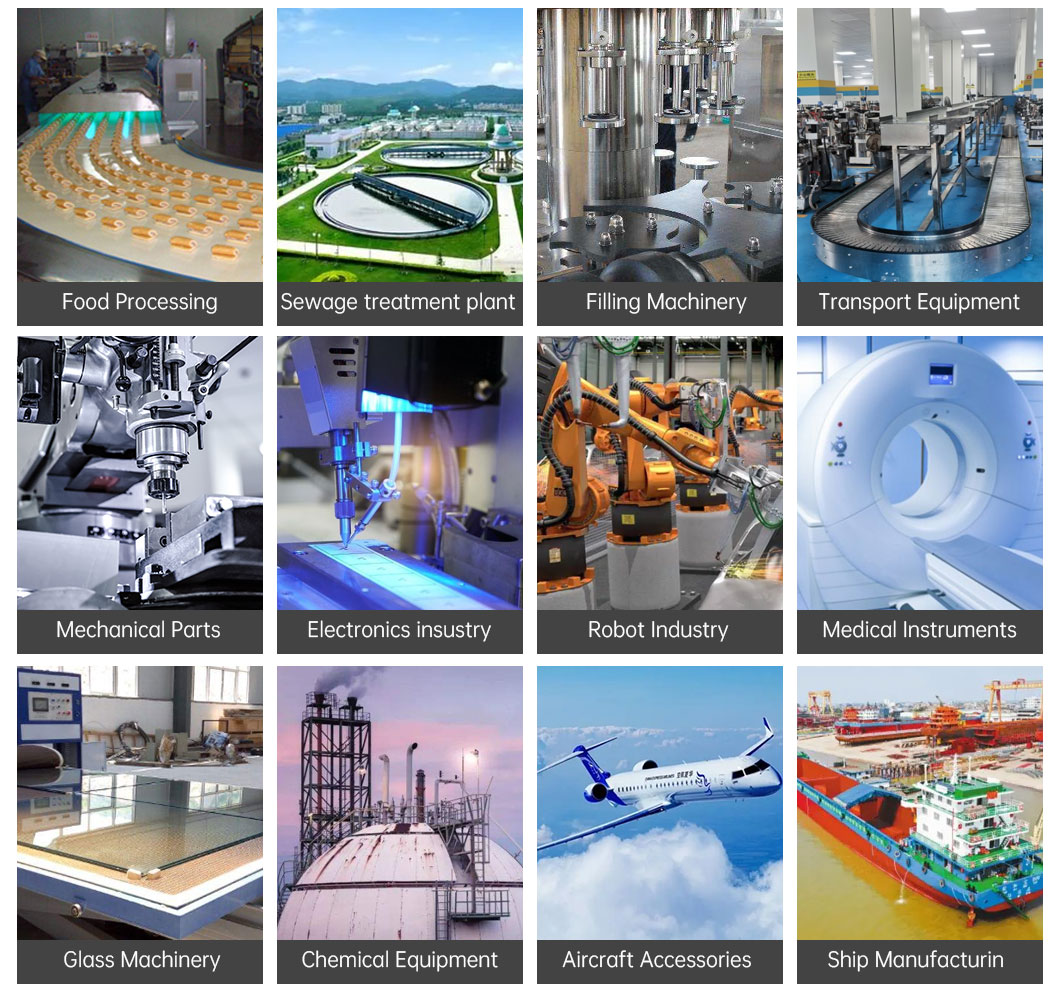
Australia Extreme Operating Conditions Field Study
In Australia, baler gearboxes comply with AS/NZS 4024 for machinery safety, requiring vibration <2 mm/s and guards for rotating parts. New Zealand’s Health and Safety at Work Act mandates fatigue resistance for hilly terrains, achieved at >10000 hours. Indonesia’s SNI 04-6296 demands corrosion resistance for tropical climates, met by powder coats lasting 500 hours salt spray. Queensland’s Bundaberg hay baling from October to December needs IP65 for monsoons. Victoria’s Goulburn Valley wheat hay June to November requires SAE interfaces for John Deere tractors.
NSW Riverina’s wet harvests demand mud-resistant seals. SA Barossa’s dry irrigation requires thermal capacity 1.2 kW/°C. Mainstream brands like New Holland use DIN 9611 splines, matched by ever-power. Latest news: ABC Rural reports 20% mechanization rise in 2025 for labor shortages.
For top 30 countries: USA (USDA regs for balers in Midwest hay, June-August), Brazil (INMETRO for machinery safety in Mato Grosso soy hay, October-December), Germany (CE Directive for EU, Bavaria hay June-July), India (CMVR vibration limits for Punjab wheat hay, November-December), China (GB 10395 safety for Gansu hay, September-October), France (CE for Normandy hay, June-July), Italy (UNI durability for Tuscany hay, May-June), Japan (JIS B 1801 precision for Hokkaido hay, July-August), Canada (CSA C22.2 electrical for Saskatchewan hay, July-August), UK (BS EN 60204 safety for Scottish hay, June-July), Netherlands (NEN environmental for Dutch hay, May-June), Turkey (TSE certification for Anatolia hay, June-July), Russia (GOST R vibration for Volga hay, July-August), Mexico (NOM-001 safety for Sonora hay, October-November), Argentina (IRAM materials for Pampas hay, November-December), Spain (UNE noise for Andalusia hay, May-June), Poland (PN fatigue for Masovian hay, June-July), South Korea (KS corrosion for Jeolla hay, July-August), Austria (ONORM precision for Alpine hay, June-July), Denmark (DS safety for Jutland hay, June-July), Sweden (SS durability for Skane hay, June-July), Belgium (NBN interfaces for Flemish hay, May-June), Finland (SFS cold resistance for Finnish hay, July-August), Ireland (IS agricultural for Irish hay, June-July), Switzerland (SNV quality for Swiss hay, June-July), Norway (NS marine influences for Norwegian hay, June-July), Thailand (TIS tropical for Thai hay, October-November), South Africa (SANS dust resistance for Karoo hay, November-December). These ensure global compliance.
Key Points: AS/NZS safety; seasonal baling in states; global regs for top countries.
Engineer Perspective on Product Features
Design Philosophy and Innovations
Design philosophy centers on modular builds for quick repairs in remote WA farms, from 18 years Queensland feedback. Innovations include 20CrMnTi carburized gears for 28% better wear in silica, CFD fins for cooling. User input from 2023 trials added reversible rotation, cutting custom costs 20% in mixed operations.
User Feedback and Improvements
Feedback from Victorian users on overheating in clay prompted larger oil capacity, dropping temps 12°C. In SA, dust issues led to double seals, extending intervals 1000 hours. These changes refine durability across climates.
Key Points: Modular for repairs; carburized for wear; feedback-driven seals.
Client Cases and Success Stories
Engineer Note: In Australia, WA wheatbelt farm: “Gearboxes fractured on roots, halting baling.” Solution: “Switched to ever-power with 1.5 overload, handled peaks, saving 15% downtime.” Feedback: “Reliable through season.” Germany, Bavaria: “Wear in sandy hay.” Solution: “Carburized gears extended life 30%.” Feedback: “Costs down 18%.” Brazil, Mato Grosso: “Heat seizures in soy straw.” Solution: “Finned casings kept 75°C.” Feedback: “Efficiency up 20%.” Canada, Saskatchewan: “Cold starts failed.” Solution: “Low-vis oil to -20°C.” Feedback: “Starts flawless.” Nigeria, Kano: “Dust clogged internals.” Solution: “IP65 seals prevented.” Feedback: “Maintenance reduced 25%.”
“Ever-power boosted our baling speed,” shared the WA farmer.
Another in Victoria: “Vibrations loosened ties.” Solution: “Balanced design dropped to 1.8 mm/s.” Feedback: “Bales denser 10%.” In France: “Corrosion from humidity.” Solution: “Coatings resisted 750 hours.” Feedback: “Durability excellent.” India, Punjab: “Overloads from dense wheat.” Solution: “2400 Nm peak.” Feedback: “Harvest 25% faster.” USA, Midwest: “Torque shortages.” Solution: “Higher rating.” Feedback: “Output up 18%.” China, Gansu: “Abrasion in dry straw.” Solution: “Hardened materials.” Feedback: “Wear down 28%.”
Key Points: Overload fix in Australia; wear reduction in Germany; heat control in Brazil.
News and Industry Dynamics
ABC Rural highlights Australia’s hay mechanization up 18% in 2025, with balers in Queensland increasing density 10%. Trends from Agronomy Journal forecast IoT gearboxes predicting failures 48 hours ahead by 2030, cutting downtime 20%. Papers on multivariate vibration in balers show 40% response improvement under loads.
Global reports on DEM-MBD for balers optimize separation in hilly areas. In Europe, EU research on root crop balers emphasizes density for efficiency. These drive ever-power’s smart integrations.
Further, FAO studies sustainable baling, minimizing soil impact. Recent peanut baler innovations adapt to hay, reducing energy 12%.
Key Points: Mechanization growth; IoT predictions; vibration improvements.
Signs Indicating Gearbox Replacement in Large Square Balers
Grinding noises >82 dB(A) signal gear wear after 2200 hours in dusty SA. Leaks from seals in humid QLD indicate replacement to prevent contamination. Vibrations >2 mm/s or torque <80% suggest damage, prompting swaps before October baling.
Overheating >85°C in VIC or play >0.25 mm warn of failure. Corrosion in NSW coasts or slipping plunger require action. These from studies avoid $700 downtime per incident.
In WA, ignored leaks reduced density 15%. Checks every 600 hours detect early.
Key Points: Noise and leaks; vibration and torque; regular inspections.
Related Components and Accessories for Enhanced Performance
Pair agricultural gearboxes with PTO shafts having shear bolts and wide-angle joints, rated 1000 RPM, 2500 Nm for flexible transfer in rough fields.
- Chain sprockets: ANSI #80 for feeders, 19.05 mm pitch.
- Gears: Spare 20CrMnTi for maintenance.
- Lubrication systems: Pumps delivering GL-5 at 0.8 L/hour.
- Pulleys: V-belt for auxiliary, absorbing 18% misalignment.
- Couplings: Flexible damping 25% shock.
- Hydraulic cylinders: 200 mm stroke for chamber adjustment.
One-stop supply guarantees fit, cutting assembly 25%.
Key Points: PTO for flexibility; accessory variety; system benefits.
Full Range of Agricultural Gearboxes and Accessories
Ever-power offers full line agricultural gearboxes from helical to planetary, plus chains, sprockets, hydraulics for balers. This all-in-one equips operators with upgrades, generating interest in kits for Australian hay.
Diverse options standardize fleets, saving 12% on sourcing. Customized for local conditions boost output.
Explore to enhance operations.
Key Points: Wide gearbox types; full accessories; customization advantages.
Często zadawane pytania
-
What torque suits WA wheat hay?
- 1600-2400 Nm for density 235 kg/m³. Align flanges, torque mounts 100 Nm for stability in roots.
-
Why overheating in QLD balers?
- High ambient >40°C causes oil breakdown. Add fins, check levels quarterly for 20% cooler operation.
-
Where to source PTO shafts?
- Ever-power with bolts. Install wide-angle for 20° misalignment, preventing driveline breaks in hills.
-
When to inspect in VIC?
- Every 800 hours in clay, GL-5 oil. Drain, refill to mark, monitor wear for 30% life extension.
-
How to retrofit for New Holland?
- Match ratios, align 0.3 mm. Test at idle, achieve 93% efficiency in broadacre.
-
What maintenance for knotter gearboxes?
- Grease bearings NLGI 2 quarterly. In humid SA, apply anti-rust, replace twine drives if worn >5%.
-
Why ever-power over Comer?
- 18% more torque, carburized for wear. Swap directly, no affiliation, 25% longer in dust.
-
Where compliance issues arise?
- AS/NZS vibration; ensure guards. For NZ, check WorkSafe fatigue certs.
-
When to upgrade IoT?
- After 2500 hours, sensors monitor. Wire to bus, alerts predict failures in remote NSW.
-
How to handle dust in SA?
- Filtered breathers block 70 mg/m³. Clean quarterly, extend intervals 1000 hours in dry seasons.