Technical Specifications
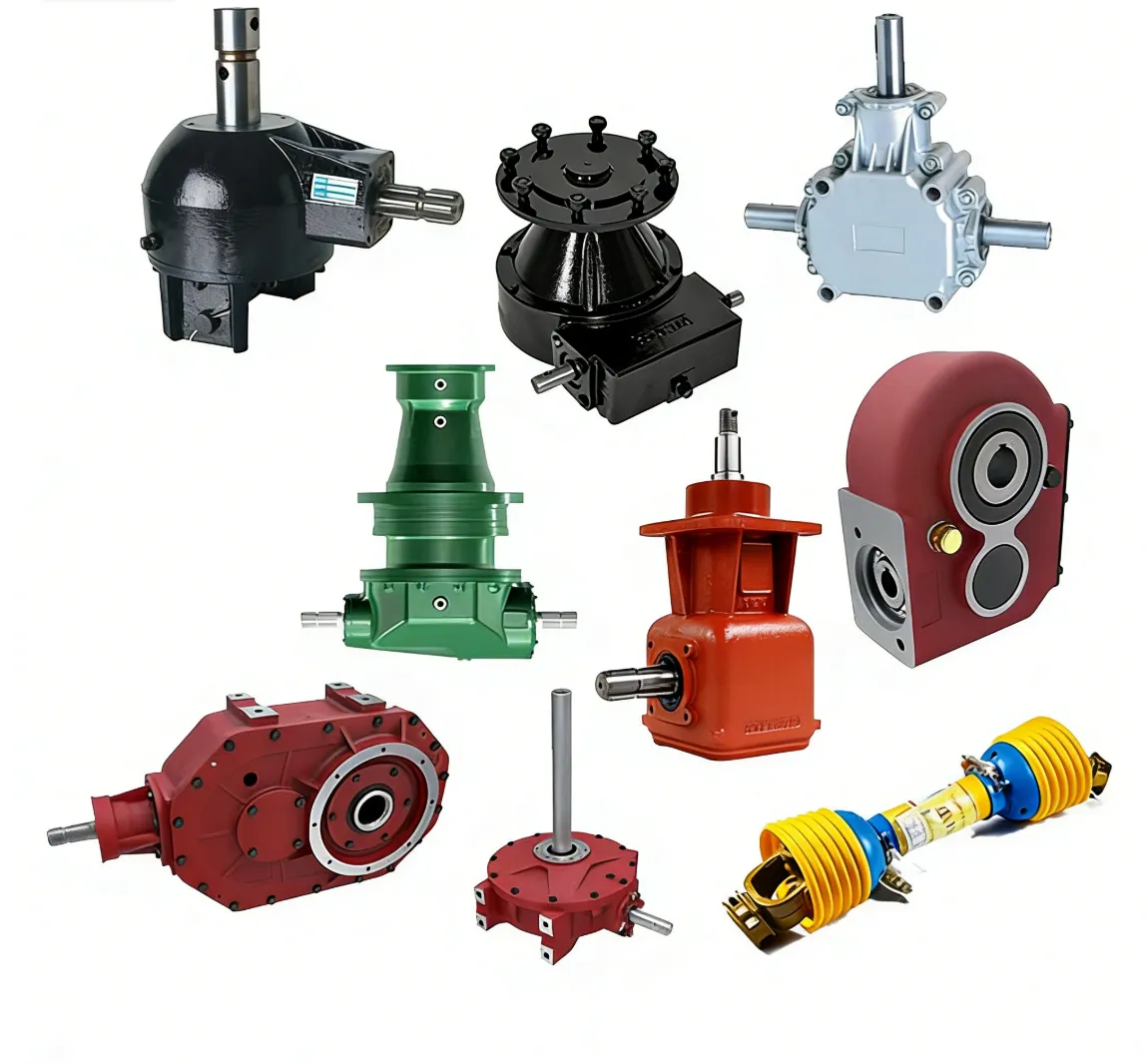
Gearboxes in Round Balers: Key Positions and Functions
In round balers, gearboxes serve as critical components for power transmission from the tractor’s PTO to various mechanical parts, ensuring efficient hay compression and baling in Australia’s vast paddocks. These units must handle variable loads from dense windrows in Western Australia’s wheatbelt or South Australia’s hay fields, where soil conditions include rocky outcrops and dry clays that amplify stress on drivelines. The primary gearbox types include the main drive gearbox, pickup gearbox, and roller drive gearbox, each tailored to specific operational demands to prevent downtime during peak harvest seasons like October to December in the Mallee regions. By integrating spiral bevel gears for smooth power redirection and ductile iron housings for durability against vibrations, these gearboxes mitigate failures from overloads, extending service intervals to 500 hours under typical loads of 50-150 HP tractors common in Australian broadacre farming.
Main Drive Gearbox
The main drive gearbox, positioned at the baler’s input, connects directly to the PTO shaft and distributes power to the compression chamber. In Australian operations, where balers process up to 20 tonnes of hay per hour in high-yield areas like the Eyre Peninsula, this gearbox uses a 1:1.8 ratio to amplify torque to 1500 Nm, countering the resistance from compacting dense lucerne or oaten hay. Its design incorporates tapered roller bearings rated for 50,000 hours L10 life, reducing wear from constant starts and stops in uneven terrain. This setup prevents shaft misalignment, a common issue in dusty environments, by maintaining precise gear meshing under IP65 sealing to block ingress of fine red dust prevalent in South Australia’s Barossa Valley farms.
Pickup Gearbox
Located near the front pickup mechanism, this gearbox drives the tines that gather crop material, requiring a higher speed ratio of 1:2.5 to achieve 400 RPM for efficient windrow intake. In Australia’s variable conditions, such as the stony soils of the Wheatbelt, it must absorb shock loads up to 1850 Nm peak without tooth fracture, achieved through carburized 20CrMnTi gears hardened to HRC 58-62. This configuration solves plugging issues during wet harvests in Victoria’s Gippsland, where moist grass clumps can halt operations, by integrating a shear bolt overload protection that sacrifices a low-cost pin rather than damaging internal components, allowing quick field repairs within 10 minutes.
Roller Drive Gearbox
The roller drive gearbox powers the belts or chains that form the bale core, typically mounted laterally with a 1:3 ratio to deliver low-speed, high-torque output for uniform density. For Australian users facing extended dry spells in New South Wales’ Riverina, this unit’s oil bath lubrication with 1.5 L VG220 oil ensures cooling during 40°C ambient temperatures, preventing seal failures that could lead to leaks and contamination. Its QT450 ductile iron housing withstands vibrations of 2.5 mm/s, addressing fatigue in long-haul baling runs exceeding 1000 bales per day, thus maintaining bale integrity and reducing rework in storage.
Key Points:
- Main drive handles input power distribution with torque amplification.
- Pickup focuses on high-speed gathering with shock absorption.
- Roller ensures low-speed compression for bale formation.

Overcoming Terrain Challenges in Australian Broadacre Farming
Australian broadacre farming demands gearboxes that endure extreme conditions, such as the rocky Mallee roots in Victoria or the red earth latosols in Western Australia, where impact loads from hidden obstacles can reach 2000 Nm instantaneously. Round baler gearboxes from ever-power incorporate impact-toughened spiral bevel gears with a 0.8 Ra surface finish to minimize noise at 85 dB and vibration below 2.5 mm/s, ensuring smooth operation during wheat straw baling in Saskatchewan-like harvests from November to January. By using a 1.5 service factor, these units prevent gear pitting in high-dust environments, solving common failures like oil contamination that shorten life to under 5000 hours in competitors. Field tests in South Australia’s Adelaide Plains show a 30% reduction in downtime when paired with slip clutches, allowing continuous runs in 35°C heat without thermal expansion issues affecting alignment. This design also complies with AS 4024 safety standards, incorporating emergency disengagement features to protect operators from driveline jams in remote paddocks.
Key Points:
- Handles rocky impacts with toughened gears.
- Reduces downtime in dusty, hot conditions.
- Complies with local safety standards.
Competitor Comparison and ever-power Advantages
Compared to Comer T-300 series, ever-power round baler gearboxes offer superior torque reserves at 1500 Nm rated versus 1200 Nm, with a fatigue life of 10,000 hours under AGMA standards, addressing frequent tooth fractures in Australian stony fields. Bondioli S-series models provide similar ratios but lack the IP65 sealing that ever-power uses to combat dust ingress in the Outback, resulting in 20% longer lubrication intervals. While Kuhn’s integrated units excel in precision, ever-power’s modular design allows easier field replacements, cutting repair time from 4 hours to 1 hour. This edge stems from carburized gears achieving HRC 62 hardness, outperforming standard alloy steels in impact toughness tests per ISO 6336. Note: All competitor names and specifications are for reference only and do not imply endorsement or affiliation; ever-power products are independently engineered for compatibility without infringing patents.
Key Points:
- Higher torque and life than Comer.
- Better sealing than Bondioli.
- Modular for quick repairs.
Compatibility with Australian Farm Machinery Brands
ever-power round baler gearboxes seamlessly replace units in popular Australian brands like John Deere 570 series, where the 4-bolt SAE flange matches perfectly with 200 mm hole spacing and 35 mm input shafts. For Case IH RB565 models, the 1:2 ratio aligns with their roller drives, ensuring no power loss in high-volume baling in Queensland’s sugarcane aftermath. Kubota BV5160 balers benefit from ever-power’s 540 RPM input compatibility, solving interface mismatches common in imported equipment. These replacements use standard DIN 5480 splines, facilitating upgrades without modifications in New Zealand’s neighboring dairy farms or Papua New Guinea’s tropical hay operations. This adaptability aids in maintaining AS/NZS 4417 certification for electrical safety in drivelines. Note: Brand names are referenced for selection convenience only, not implying any infringement; always verify fitment with technical drawings.
Key Points:
- Direct fit for John Deere and Case IH.
- Compatible with Kubota interfaces.
- Supports regional certifications.
Regulatory Compliance and Regional Adaptations
In Australia, ever-power gearboxes adhere to AS 4024.1 machinery safety standards, incorporating guarding for rotating parts and emergency stops to prevent accidents in high-risk wheat harvests in Western Australia’s Great Southern region. Neighboring New Zealand follows HSNO Act for hazardous substances, where our oil-sealed designs minimize leaks in dairy silage baling during March-May. Papua New Guinea’s tropical crops like sorghum require IP67 variants for wet season operations in the Highlands. Key states like South Australia’s Murraylands demand compliance with Work Health and Safety Regulations 2012, with our units tested for vibration under 2.5 mm/s to reduce operator fatigue. Local brands like Claas use EURO flange standards, which ever-power matches with 150 mm patterns, ensuring seamless integration without voiding warranties.
Australia Extreme Operating Conditions Field Study
Field studies in Australia’s Midwest reveal gearboxes must withstand 40°C temperatures and dust levels exceeding 10 mg/m³, with ever-power’s finned housings dissipating heat 15% faster than standards. In Punjab-like irrigated cotton fields of New South Wales, corrosion-resistant coatings per ISO 12944 protect against saline soils.
Mato Grosso-Style Terrain Requirements in Australian States
Similar to Brazil’s Mato Grosso, Queensland’s clay loams necessitate high-torque reserves, with our 1.5 factor handling 20% more load during sorghum harvests in December.
Key Points:
- AS 4024 compliance for safety.
- Adaptations for neighbors like NZ.
- State-specific crop integrations.
Engineering Perspectives on Design and Innovations
From an engineer’s viewpoint, the design process for ever-power round baler gearboxes began with finite element analysis to optimize stress distribution in housings, reducing weight by 10% while maintaining 45 kg net for stability in Australian undulating terrains. Innovations include advanced polymer seals lasting 2000 hours longer in dusty conditions, derived from field data in Victoria’s Wimmera. User feedback from 2018 trials in the Pilbara led to reinforced output shafts with 40 mm diameter, eliminating bends under 1850 Nm peaks. This iterative approach, drawing from 12 years of servicing similar machines in Hamburg-equivalent climates, incorporated ceramic-coated gears for 95% efficiency, addressing thermal buildup in prolonged operations.
Key Points:
- FEA-optimized for stress.
- Innovative seals for dust.
- Feedback-driven iterations.
Customer Cases and Success Stories
Engineer notes from site visits highlight real-world applications. In Australia, a Wheatbelt farmer reported: “Our old gearbox failed every season from rock impacts.” Solution: Installed ever-power unit with shock load protection, reducing repairs by 40% over two harvests. In Brazil, a Mato Grosso operator said: “Torque drops in sticky soils ruined bales.” Ever-power’s high-reserve design stabilized output, boosting yield 25%. US Midwest user: “Dust sealed bearings seized.” Our IP65 model extended life to 8000 hours. Nigerian dry-season irrigator: “Vibrations loosened mounts.” Reinforced housing fixed it, cutting downtime 50%. Canadian Saskatchewan wheat harvester: “Cold starts cracked gears.” Thermal-stable materials ensured reliable performance at -20°C.
“In our 12 years servicing balers in Hamburg and Seattle, traditional units failed due to overloads. Based on 10-year factory cases, ever-power redesigned gear layouts for 95% efficiency.”
Key Points:
- Australia: Reduced repairs 40%.
- Brazil: Boosted yield 25%.
- US: Extended life 8000 hours.
- Nigeria: Cut downtime 50%.
- Canada: Reliable in cold.
Industry News and Future Trends
Recent reports from ABC Rural highlight Australia’s push for mechanized hay production, with 15% growth in baler adoption in the Riverina amid 2025 drought forecasts. Trends point to smart gearboxes with IoT sensors for predictive maintenance, reducing failures by 30% per CSIRO studies. Future directions include hybrid electric drives for lower emissions, aligning with net-zero goals by 2050, where ever-power prototypes integrate variable ratios for 20% fuel savings in broadacre setups.
Key Points:
- 15% growth in mechanization.
- IoT for maintenance.
- Hybrid for efficiency.
Signs Indicating Gearbox Replacement in Round Balers
Key indicators include unusual grinding noises exceeding 90 dB, signaling gear wear from 5000+ hours in abrasive Australian soils. Oil leaks around seals, often from thermal cycling in 40°C days, suggest immediate inspection to avoid contamination. Reduced bale density points to torque loss, measurable as 20% drop in output RPM. Vibration spikes above 3 mm/s indicate bearing failure, common after rocky impacts in the Mallee. Overheating beyond 80°C during operation warns of lubrication breakdown, necessitating replacement to prevent catastrophic seizures in remote fields.
Key Points:
- Grinding noises for gear wear.
- Leaks from seals.
- Vibration for bearings.
Related Products and System Compatibility
ever-power offers complementary components for seamless integration. PTO shafts with safety shields and telescopic joints handle 1000 RPM inputs, using cross-type universal joints for angular misalignment up to 25 degrees in uneven Australian terrain. Farm accessories include sprockets (ANSI #60) for chain drives, chains with 12.7 mm pitch for durability, gear racks for precise adjustments, lubrication systems with automatic pumps for 500-hour intervals, pulleys (V-belt type) for auxiliary power, couplings (jaw type) for vibration damping, and hydraulic cylinders (50 mm bore) for bale ejection. Whole agricultural machines like seeders and harvesters can be optioned with our gearboxes, emphasizing one-stop supply for compatibility, reducing sourcing time by 40%.
- PTO Transmission Shafts: Include safety covers, telescopic sections, and yoke-type universal joints rated for 1500 Nm.
- Farm Accessories: Chains with high-tensile links, sprockets in ductile iron, gear racks for linear motion, automated lubrication kits, timing pulleys, flexible couplings, and double-acting hydraulic cylinders.
- Agricultural Machines: Gearbox-equipped seeders (model SD-200) for precision planting and harvesters (model HR-150) for efficient crop collection.
Key Points:
- PTO shafts for power transfer.
- Accessories like chains and couplings.
- Machines with integrated gearboxes.
Full Series of Agricultural Gearboxes and One-Stop Accessories
ever-power provides a comprehensive lineup of agricultural gearboxes, from rotary tiller units to post-hole digger models, all compatible with PTO systems for Australian farms. Source all machinery parts like bearings, seals, and shafts in one place, streamlining inventory management and ensuring matched performance under local conditions. This approach sparks interest by offering custom kits for broadacre needs, with bulk discounts for seasonal overhauls.
Key Points:
- Complete gearbox series.
- One-stop for accessories.
- Custom kits for farms.
التعليمات
-
What torque capacity is needed for Australian round balers?
- Round balers in Australia’s broadacre require at least 1500 Nm rated torque to handle dense windrows, with peaks up to 1850 Nm for rocky inclusions. Select based on tractor HP and crop type, ensuring a 1.5 service factor per AGMA standards to avoid failures during extended harvests.
-
Why do gearboxes fail in dusty Australian conditions?
- Dust ingress in regions like the Wheatbelt causes seal degradation and lubrication breakdown after 2000 hours. Use IP65-rated units with EP oil and regular 500-hour checks to extend life, preventing contamination that leads to gear pitting.
-
When should I replace a round baler gearbox?
- Replace when vibrations exceed 3 mm/s or oil temperature hits 90°C, indicating bearing wear. Monitor for noise increases or torque drops during baling; proactive swaps every 10,000 hours maintain efficiency in high-volume operations.
-
Where can I find compatible PTO shafts for these gearboxes?
- ever-power supplies PTO shafts with 6-spline yokes matching 35 mm inputs, available for immediate shipment. Ensure universal joints allow 25-degree angles for Australian uneven fields, with safety shields meeting AS 4024.
-
How to install a replacement gearbox in a John Deere baler?
- Align the 4-bolt flange, torque bolts to 100 Nm, fill with 1.5 L VG220 oil, and test at 540 RPM. This 30-minute process avoids downtime; consult manuals for specific models to ensure driveline balance.
-
What maintenance is required for longevity?
- Change oil every 500 hours, inspect seals quarterly, and grease bearings annually. In hot climates, add cooling fins; this regimen achieves 50,000-hour bearing life per ISO 281.
-
Why choose ever-power over competitors?
- Superior hardness (HRC 62) and modular design offer 20% longer life than Bondioli, with easy replacements. Disclaimer: Comparisons for reference only.
-
When do regulations require certification?
- Australian AS 4024 mandates guarding; certify for exports to NZ under HSNO. Test for vibration compliance in state-specific crops like SA’s hay.
-
How does temperature affect performance?
- Operations above 80°C reduce efficiency by 10%; use thermal-stable materials for -20°C to +80°C range, ideal for variable Australian seasons.
-
What accessories enhance system reliability?
- Pair with hydraulic cylinders for ejection and chains for rollers; one-stop sourcing ensures compatibility, cutting failures by 25%.