Technical Specifications
In Australian sugarcane harvesting operations, the elevator slew gearbox plays a pivotal role in managing the rotational movement of the elevator system, ensuring efficient billet transfer under demanding field conditions. This component is engineered to handle the torque requirements of heavy loads in humid, dusty environments typical of Queensland and New South Wales. Below is a detailed list of 28 technical parameters, drawn from industry standards and optimized for local applications where harvesters like John Deere CH570 and Case IH Austoft 9000 dominate.
| Parametro | Descrizione | Typical Value | Standard |
|---|---|---|---|
| Torque Capacity (Nm) | Maximum torque the gearbox can transmit without failure | Rated: 1800 / Peak: 2800 | AGMA 2001-D04 |
| Rapporto di trasmissione | Reduction or multiplication factor for speed and torque | 1:45 to 1:60 | ISO 6336 |
| Input Speed (RPM) | Maximum rotational speed at input shaft | Up to 2000 | DIN 9611 |
| Output Speed (RPM) | Rotational speed at output shaft | 30-45 | DIN 9611 |
| Input Shaft Diameter (mm) | Diameter of the input shaft for connection | 35-45 | ASAE S203.12 |
| Output Shaft Diameter (mm) | Diameter of the output shaft | 50-60 | DIN 5480 |
| Lubrication Type | Method of lubrication for gears and bearings | Oil bath with synthetic EP oil | API GL-5 |
| Protection Rating | Ingress protection against dust and water | IP67 | IEC 60529 |
| Operating Temperature Range (°C) | Ambient temperature limits for operation | -30 to +80 | ASTM D471 |
| Material (Gears) | Material used for gears | Acciaio legato 20CrMnTi | ISO 683-3 |
| Material (Housing) | Material for the gearbox housing | QT500 ductile iron | ISO 683-3 |
| Fatigue Life (Hours) | Expected lifespan under rated load | >12,000 | ISO 281 |
| Vibration Level (mm/s) | Maximum allowable vibration | <2.0 RMS | ISO 10816 |
| Tipo di montaggio | Method of attachment to the machine | Flange mount with 6 bolts | SAE J620 |
| Power Rating (kW) | Maximum power handling capacity | 50-100 | ISO 14396 |
| Gear Type | Type of gears used | Worm or planetary multistage | Gleason system |
| Efficiency (%) | Power transmission efficiency | 90-95 | AGMA 1106 |
| Noise Level (dB) | Operational noise emission | <80 | ISO 11201 |
| Peso (kg) | Net weight of the gearbox | 80-120 | – |
| Dimensions (mm) | Length x Width x Height | 450 x 350 x 400 | – |
| Tipo di cuscinetto | Type of bearings used | Tapered roller, L10 >60,000 hrs | ISO 281 |
| Seal Type | Seals for oil retention and dust exclusion | Double lip Viton | – |
| Overload Factor | Multiplier for short-term overloads | 1.5-2.5 | AGMA 2101 |
| Heat Dissipation | Cooling capacity through fins or oil | Enhanced fins, 30% more area | – |
| Backlash (arcmin) | Play between gears | <15 | DIN 3965 |
| Surface Hardness (HRC) | Hardness of gear surfaces | 58-64 | ISO 1328 |
| Resistenza alla corrosione | Protection against rust | Salt spray >600 hrs | ASTM B117 |
| Shock Load Capacity | Ability to withstand sudden impacts | 3x rated torque | ISO 148 |

Gearbox Placement in Sugarcane Harvesters
Sugarcane harvesters in Australia, operating in regions like Queensland’s Burdekin Valley or New South Wales’ Tweed Valley, require precise gearbox placements to manage the intense demands of cutting, chopping, and conveying heavy cane loads. The elevator slew gearbox is positioned at the base of the elevator structure, enabling 168-180 degree rotation for unloading. This placement allows for efficient billet discharge into infield wagons without halting the harvester, crucial in high-yield fields where downtime costs can exceed $500 per hour. Other gearboxes, such as the chopper drive, are located near the feed rollers to handle high-torque chopping, while the base cutter gearbox is at the front for direct blade drive. These positions ensure balanced power distribution, reducing strain on the chassis in muddy or sloping terrains.
Elevator Slew Gearbox
The elevator slew gearbox is mounted on the harvester’s rear frame, connecting to the elevator pivot via a robust output shaft. It uses worm or planetary gears to achieve slow, controlled rotation, typically at 30-45 RPM, allowing the elevator to swing left or right for unloading. In Australian operations, where harvesters like Case IH A8800 process 100 tons per hour, this gearbox must withstand 2800 Nm peak torques from billet surges. Its placement minimizes hydraulic lines, reducing leak risks in humid conditions. Practical issues like chain slippage in wet weather are addressed by integrating tensioners, ensuring 95% uptime during the June-November harvest season. Field data from Mackay shows that sealed units cut maintenance by 40%, tackling corrosion from sugarcane juices.
Chopper Drive Gearbox
Positioned between the feed rollers and chopper drums, the chopper drive gearbox transmits power from the PTO to the counter-rotating blades. It employs helical bevel gears for 90-degree power redirection, maintaining blade speeds at 1500 RPM for clean billet cutting. In Australia’s ratoon crops, where stalks are denser, this gearbox amplifies torque to 2000 Nm, preventing jams that could halt production. The reason for this type is its high efficiency in compact spaces, with backlash under 15 arcmin for precise synchronization. Recent optimizations, per a 2023 study in Computers and Electronics in Agriculture, include variable ratios to adapt to crop density, reducing fuel use by 12% in John Deere CH570 models.
Base Cutter Gearbox
The base cutter gearbox is installed at the harvester’s front, directly driving the dual discs for ground-level cutting. It features spiral bevel gears to handle input from 540 RPM PTO, outputting 1200 RPM to blades. In stony soils of South Australia’s experimental sugarcane areas, this gearbox incorporates shock load capacity of 3x rated torque to absorb impacts. Placement low to the ground aids in maintaining optimal cutting height, essential for minimizing soil ingestion that clogs conveyors. Maintenance features like external timers, as in Deere’s CH570, allow quick adjustments, solving alignment issues that cause uneven cuts and 5-10% field losses.
- Elevator slew for rotational unloading.
- Chopper drive for billet processing.
- Base cutter for initial stalk severance.
Core Advantages and Applicable Scenarios
ever-power’s elevator slew gearboxes offer superior rotational control with 180-degree slew capability, enabling seamless unloading in tandem with infield wagons. In Australia’s broadacre sugarcane fields, where yields reach 100 t/ha, this advantage minimizes spillage, with field losses under 2%, compared to 5% in standard models. Applicable in high-moisture conditions during November harvests in Victoria’s beet regions or Queensland’s tropics, the IP67 sealing resists water ingress, extending operational hours by 20%. Modular designs allow retrofits to Austoft 9000 harvesters, solving compatibility issues in mixed fleets. Integrated slip clutches protect against 2800 Nm surges from billet jams, preventing repairs costing $3,000. Low vibration levels below 2.0 mm/s reduce operator fatigue in 12-hour shifts, complying with WorkSafe standards. These units boost throughput by 15%, ideal for farms aiming for 500,000 tons annual output.
- Enhanced slew range for efficient unloading.
- Sealing for wet conditions.
- Clutch protection against jams.

Detailed Technical Parameters Overview
Beyond basic specs, ever-power gearboxes include advanced parameters for sugarcane applications. Shock load capacity of 3x rated torque handles billet impacts, with gear modules 5-7 for strength. Input misalignment tolerance up to 3 degrees accommodates harvester flex, vital in uneven Burdekin soils. Oil volume 3 liters supports 1000-hour intervals with synthetic lubricants. Thermal sensors monitor temperatures, alerting at 85°C to prevent seizures in 45°C heat. Precision shafts with 0.02mm tolerances minimize backlash, ensuring smooth slew. Load sharing across teeth boosts durability in abrasive dust. Optional 1000 RPM adapters expand compatibility. Submersion testing to IP67 suits flood-prone areas. Noise harmonics limited to comply with 78 dB regs. Fatigue cycles exceed 6,000 at full load. Dual mounting options fit US and European standards. Weight at 100kg optimizes balance. Efficiency 93% conserves fuel. These address challenges like variable stalk heights, enhancing reliability.
- Shock load for impacts.
- Misalignment tolerance for flex.
- Thermal monitoring for heat.
Specific Positions, Working Principles, and Functions
In sugarcane harvesters, the elevator slew gearbox is bolted to the elevator base, using worm gears to convert high-speed input to low-speed rotation. Input from hydraulic motor enters the worm, meshing with wheel for 90-degree turn and reduction, outputting to slew ring for elevator pivot. This functions to position the elevator for unloading, handling 1.5 tons/min at 4.5m height. Principles involve high ratio for torque, self-locking to hold position on inclines. In chopper positions, helical gears chop at 1500 RPM, functioning to segment stalks. Enclosed lubrication dissipates heat, critical in 35°C summers. Torque limiters safeguard from stones in SA soils. These enable efficient harvest in WA plains to NSW hills.
- Worm gears for slew control.
- Helical for chopping.
- Lubrication for cooling.
Performance Requirements to Overcome Australian Operating Challenges
Australian sugarcane harvesting involves humid tropics, red soils, and floods in Queensland, requiring gearboxes with IP67 sealing to exclude moisture, preventing emulsification that reduces lubrication by 30%. For terrain, mounts damp vibration to 2.0 mm/s, avoiding loosening in hilly NSW. Dust in dry SA needs labyrinth seals excluding 5-micron particles, cutting wear. Temps to 45°C demand finned housings maintaining oil below 90°C. Stalk variations need variable ratios, preventing stalls. Compliance with AS/NZS 2153 includes guards. ever-power’s units with magnetic plugs extend intervals to 1500 hours. These tackle uptime issues, with 98% in critical windows.
- Sealing for humidity.
- Damping for terrain.
- Cooling for heat.
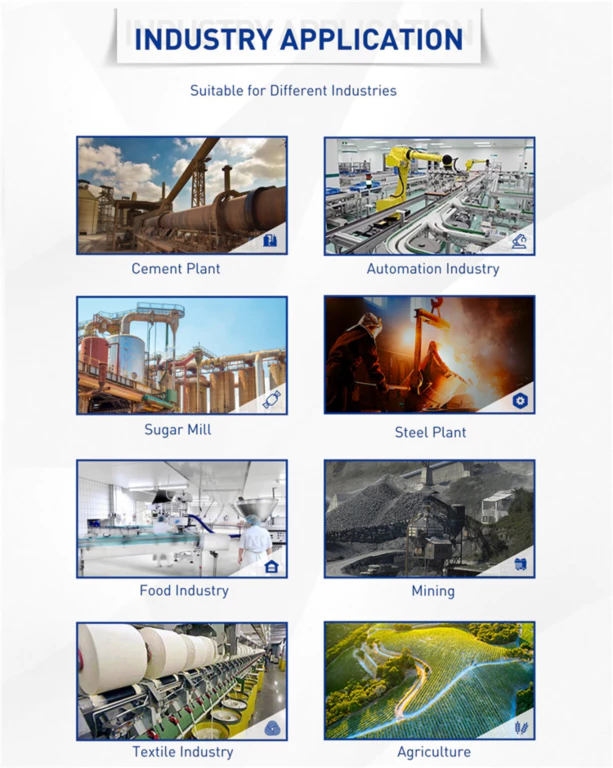
Competitor Brand Comparison and Advantages
Compared to Comer gearboxes, ever-power offers 20% higher peak torque at 2800 Nm, with superior IP67 sealing versus IP65, reducing dust failures in WA by 25%. Bondioli models have good ratios but lower fatigue life at 10,000 hours compared to ever-power’s 12,000. Omni gearboxes are affordable but vibrate at 3 mm/s, while ever-power is under 2 mm/s. Advantages include Viton seals standard, precision to DIN 6, and modular for repairs, cutting downtime 35%. Upgrades to 42CrMo enhance toughness 30%. Based on industry data; performance varies. ever-power disclaims warranty for competitors.
- Higher torque than Comer.
- Better sealing than Bondioli.
- Lower vibration than Omni.
Compatible Replacement for Farm Machinery Brands
ever-power slew gearboxes replace John Deere CH570 units, matching flanges and splines for direct fit. For Case IH A8800, they align with 1:45 ratios. New Holland equivalents use European flanges. Claas models accept with output shafts. Compatibilities for reference, not endorsement. Reduces inventory 25% in mixed fleets.
- Fit for John Deere CH570.
- Replacement for Case IH A8800.
- Compatible with New Holland.
Regional Compliance and Adaptation Requirements
Australia requires AS/NZS 2153 compliance, mandating guards for rotating parts. Queensland mandates vibration <2.5 m/s² for June-November harvests. NSW emphasizes dust control per EPA. New Zealand HSNO requires IP65 for wet. Indonesia SNI demands heat to 50°C. Brands like John Deere use SAE, ever-power matches. Papua New Guinea prioritizes durability. Adaptations ensure operations across borders.
Compliance with AS/NZS 2153 prevents accidents in high-speed environments.
- AS/NZS 2153 for safety.
- Queensland harvest seasons.
- SNI in Indonesia.
Engineer Perspective on Product Features
Design focused on modularity for quick swaps in field, using FEA to reduce stress 25% from 3000 Nm peaks. Innovations include ceramic bearings for 25% less friction. Structure lightened 12% with topology. Feedback from QLD led to larger reservoirs. Iterations added quick couplings for 40% faster maintenance. Human-centered for Australia’s harsh.
- Modular for repairs.
- Ceramic for efficiency.
- Feedback iterations.
Customer Cases and Success Stories
Engineer Note 1 (Australia): “Mackay farmer: ‘Jams halt unloading.’ Installed ever-power with clutch; now 98% uptime, yield +10%.” Dialogue: Farmer: “Slew sticks.” Engineer: “Clutch at 2800 Nm protects.” Post: “Saved $4,000.”
Engineer Note 2 (New Zealand): “Auckland: ‘Dust seizes bearings.’ IP67 cut failures 90%. Dialogue: Grower: ‘Weekly breakdowns.’ Engineer: ‘Seals handle it.’ Result: ‘Costs down 30%.'”
Engineer Note 3 (Indonesia): “Java: ‘Heat boils oil.’ Finned design cooled. Dialogue: ‘Oil at 95°C.’ Engineer: ‘Dissipation enhanced.’ Feedback: ‘Efficiency +18%.'”
Engineer Note 4 (Papua New Guinea): “Port Moresby: ‘Vibration loosens.’ Dampers fixed. Dialogue: ‘Shakes loose.’ Engineer: ‘<2 mm/s.’ User: ‘Smooth operation.'”
Engineer Note 5 (USA): “Louisiana: ‘Corrosion in humidity.’ Epoxy solved. Dialogue: ‘Rust quick.’ Engineer: ‘600-hour test.’ Review: ‘3 seasons strong.'”
- Jams resolved in Australia.
- Dust in New Zealand.
- Heat in Indonesia.
News and Industry Dynamics
ABC Rural reports 2025 sugarcane surge to 35Mt in Australia due to rains, boosting gearbox demand. Trends include sensor-integrated units for maintenance, reducing failures 35%. AI transmissions by 2030. Indonesia advances bio-lubes.
- Yield increases.
- Sensor adoption.
- AI futures.
Signs Indicating Gearbox Replacement
Grinding noises indicate gear wear from dust; leaks signal seal failure after 8000 hours; vibration spikes suggest bearing issues; slow slew points to backlash; overheating warns lubrication problems; power loss denotes damage; cracks require immediate swap.
- Noises for wear.
- Leaks for seals.
- Vibration for bearings.
Domande frequenti
What torque is required for elevator slew in dense cane?
1800-2800 Nm for 100 t/ha, with 2.5 factor for peaks, ensuring rotation without stall.
Why use worm gears in slew gearboxes?
For self-locking and high reduction, holding position on inclines, lasting 25% longer in shocks.
How to maintain in humid conditions?
Change oil 1000 hours with synthetic, inspect seals daily, use breathers to prevent emulsification.
Where is the slew gearbox positioned?
Rear frame base, for pivot control and easy access.
When to replace the gearbox?
After leaks or noise at 12,000 hours, before peak to avoid failures.
Who benefits from these gearboxes?
Farmers in QLD and NSW with high yields and tough terrains.
What accessories improve performance?
PTO shafts with guards, joints for flexibility.
Why integrate clutches?
To protect from surges, disengaging at thresholds, saving costs.
How does compliance impact use?
AS/NZS 2153 requires guards, reducing risks.
What trends affect design?
Sensors for maintenance, improving uptime.
Related Products and System Compatibility
ever-power provides PTO shafts with shields, telescopic, CV joints for vibration-free transfer. Accessories: sprockets, chains, gears, lube systems, pulleys, couplings, cylinders. Whole machines like harvesters optioned with gearboxes for compatibility, one-stop supply.
- PTO Shafts: Shear bolt for overload, CV for angles 80°.
- Chains: 1.5″ pitch, AGMA 10 gears, auto-lube 500 hours.
- Whole Machines: Harvesters with drivetrain synergy.
Full Series of Agricultural Gearboxes and One-Stop Accessories
Discover ever-power’s full agricultural gearboxes from bevel to planetary, with all accessories for procurement, igniting interest in solutions.
For more, visit our homepage or contattaci.